

The grooming industry has a turnover problem that most owners just accept as normal. Annual turnover runs somewhere between 65% and 85% depending on your market, which means you're basically rebuilding your entire team every 14 months or so. That's not just a staffing headache — it bleeds your business dry through constant recruiting costs, training time, and lost productivity while new people get up to speed.
What most salon owners miss though: turnover isn't really about money, or even the job itself. It's about having zero structure around how people grow, get feedback, and understand where they're headed. When groomers don't know where they stand or what comes next, they start looking elsewhere. And by the time you notice they're checked out, they've already accepted another offer.
The hidden math behind grooming salon performance management
When you run a salon without proper performance systems, here's what typically unfolds. You hire someone, train them for maybe two weeks if you're thorough, throw them on the floor, and hope for the best. Six months later you realize they're still slow on standard cuts, their doodle trims look rough, and they keep running behind schedule. But you never documented any of it, never set clear expectations, and now you're stuck — either keep a mediocre groomer or restart the hiring nightmare from scratch.
The real cost shows up in three places. First, productivity tanks — a weak groomer doing 4 dogs per day instead of 6 costs you around $280 daily in lost revenue. Second, your good groomers get frustrated carrying dead weight and start job hunting themselves. Third, customers notice the inconsistency and quietly switch to that new place down the street with the five-star reviews.
Most salons try to fix this with random reviews every six months or when something blows up badly enough. That doesn't work. Performance management for grooming salons needs to be systematic, predictable, and built into weekly operations — not something you scramble together when problems explode.
Why traditional HR approaches fall apart in grooming environments
Corporate HR playbooks don't translate well to grooming salons because the environment is fundamentally different. You're dealing with commissioned professionals who see themselves as artists, not employees. They work independently most of the day, rarely function as a true team, and often view management as an obstacle rather than support.
Never miss a grooming appointment again.
Furlyly helps you book, confirm, and manage every pet grooming appointment effortlessly.
- Unified appointment scheduling
- Automated client reminders
- Staff availability & shift management
No credit card required
Standard annual reviews mean nothing to someone who gets instant feedback from every dog they groom. Generic competency frameworks can't capture the difference between a groomer who handles a matted doodle calmly versus one who panics at the first tangle. And employee engagement surveys? Good luck getting honest answers from people who spent eight hours wrestling wet dogs.
What actually works is building performance systems around the natural rhythms of salon work. Quick check-ins after difficult grooms. Weekly numbers reviews tied to commission. Monthly skill assessments based on real grooming outcomes. The system needs to feel like part of the job, not some corporate process dropped in from above.
Building hiring scorecards that actually predict grooming success
Hiring decisions in most salons come down to "can they groom?" and "will they show up?" That's how you end up with technically skilled groomers who create drama, refuse to help with cleaning, or disappear every time a difficult dog comes in.
Technical Skills (40% weight)
-
Speed on standard cuts (aim for under 90 minutes for a basic trim)
-
Handling of difficult coats (matting, undercoat)
-
Safety record and bite incidents
-
Finishing quality and attention to detail
Client Skills (20% weight)
-
Ability to explain grooming options clearly
-
Comfort discussing add-on services
-
De-escalation when owners are upset
-
Phone manner for booking calls
Operational Fit (20% weight)
-
Willingness to take walk-ins
-
Flexibility on scheduling
-
Participation in cleaning duties
-
Equipment care and organization
Team Dynamics (10% weight)
-
Communication with other groomers
-
Mentoring junior staff
-
Drama and conflict patterns
-
Respect for front desk and bathers
Growth Potential (10% weight)
-
Interest in learning new techniques
-
Openness to feedback
-
Career goals and timeline
-
Past progression in other salons
Score each area during the interview process using specific scenarios and reference checks. Anyone scoring below 3/5 in technical skills or operational fit shouldn't move forward. This catches problems before they infect your salon culture.
The 30-60-90 probation system that weeds out bad fits fast
Probation periods in grooming salons usually mean "we're watching you but not really doing anything different." That's why problem employees slip through and become permanent headaches. You need explicit checkpoints with documented standards at 30, 60, and 90 days.
Day 30 Checkpoint: By the end of the first month, a new groomer should handle basic cuts independently, maintain schedule 80% of the time, and complete all safety protocols without reminders. If they're still asking how to do a teddy bear face or taking two hours on a small dog bath and tidy, you have a problem. Document everything — dogs completed, average grooming time, incidents or complaints. Meet formally to review these numbers and set specific goals for month two.
Day 60 Checkpoint: Two months in, they should manage moderate difficulty grooms (light matting, nervous dogs), hit productivity targets consistently, and demonstrate proper retail recommendations. This is also when personality conflicts usually surface. Are they showing up late? Creating tension with specific team members? Complaining constantly about equipment or policies? Address it now with a performance improvement plan or cut them loose. Waiting until day 90 just wastes everyone's time.
Day 90 Decision: This isn't really a checkpoint — it's a decision point. Either they're meeting standards and become permanent, or they're gone. No extensions, no "let's see how next month goes." The biggest mistake salons make is letting mediocre groomers slide past probation because finding replacements feels harder than managing the problem. That's how you end up with a team full of C-players dragging down the whole operation.
The 30-60-90 onboarding framework works hand-in-hand with this probation structure, but probation adds the teeth — clear consequences for not meeting standards.
Review cadences that catch problems before groomers mentally check out
Weekly Numbers Review (5 minutes) Every Friday, pull each groomer's numbers: dogs completed, average ticket, retail sales, schedule adherence. Share these individually, not as a group ranking. "Hey Marcus, you hit 24 dogs this week with a $67 average ticket. Solid week. Noticed you're booking longer for doodles lately — everything okay there?" Not a formal review, just a quick temperature check that shows you're paying attention.
Monthly Skills Check (15 minutes) Pick one technical area to evaluate each month. January might be nail trimming technique. February could be handling difficult dogs. March focuses on creative grooming or breed-specific cuts. Watch them work, give specific feedback, document improvement areas. This prevents skills from degrading over time and keeps people learning.
Quarterly Growth Conversation (30 minutes) Every three months, have a real sit-down about career progression. Where do they want to be in a year? What skills need development? What's frustrating them about the current setup? This is when you discuss promotion possibilities, commission adjustments, or schedule changes. Document these conversations and follow through on commitments, or trust disappears fast.
Annual Compensation Review (45 minutes) Once a year, formally review their total compensation — base pay, commission structure, benefits, perks. Compare their productivity and quality metrics to salon averages and market rates. Even when you can't give raises, showing the analysis demonstrates you actually value their contribution.
This cadence means you're never more than 30 days away from a formal touchpoint with each groomer.
| Review Type | Frequency | Duration | Primary Focus |
|---|---|---|---|
| Numbers Review | Weekly | 5 min | Productivity, ticket average, schedule |
| Skills Check | Monthly | 15 min | Technical quality, improvement areas |
| Growth Conversation | Quarterly | 30 min | Career path, compensation, frustrations |
| Compensation Review | Annual | 45 min | Pay benchmarking, market rates |
Problems get caught early, good performance gets recognized regularly, and nobody gets blindsided by sudden feedback after months of silence.
Promotion ladders that give groomers a real career path
The traditional grooming career path goes: bather → groomer → maybe salon manager if they stick around long enough. That's not a career ladder, it's a dead end. Smart groomers see this immediately and start planning their exit to mobile grooming or their own salon within 18 months of getting comfortable.
Technical Track:
-
Junior Groomer (0-1 year)
Basic cuts, simple breeds, heavy supervision
-
Groomer II (1-2 years)
All standard cuts, moderate difficulty dogs
-
Senior Groomer (2-4 years)
Complex grooms, problem dogs, minimal supervision
-
Master Groomer (4+ years)
Competition-level cuts, mentoring others, specialized services
-
Grooming Specialist
Focus on specific breeds, creative grooming, or special needs pets
Leadership Track:
-
Team Lead
Supervises 2-3 groomers, handles scheduling conflicts
-
Assistant Manager
Oversees daily operations, handles customer escalations
-
Salon Manager
Full P&L responsibility, hiring/firing authority
-
Multi-Unit Supervisor
Manages multiple locations (if applicable)
Business Development Track:
-
Grooming Consultant
Trains new hires, develops protocols
-
Service Specialist
Manages add-on service programs, retail buying
-
Mobile Route Manager
Coordinates mobile grooming operations
-
Franchise Developer
Helps launch new locations
Each level needs clear criteria, not just time served. A Groomer II should complete 5-6 dogs daily, maintain under 2% complaint rate, and generate $15+ in retail per dog. Senior Groomers handle 6-8 dogs, train juniors, and manage difficult clients independently. Document these standards and review them during quarterly conversations.
The point is showing groomers they can grow without leaving. When someone sees a five-year path with increasing responsibility and pay, they stop scrolling job boards every night.
Pay review schedules that reward performance without breaking the budget
Most salons handle pay reviews reactively — someone threatens to quit, panic sets in, you throw money at them. Then everyone else finds out and demands the same. Suddenly your payroll is 55% of revenue and you're wondering how it happened.
Commission Progression Based on Productivity:
-
Tier 1 (training)
40% commission, first 90 days
-
Tier 2 (standard)
45% commission after passing probation
-
Tier 3 (productive)
50% commission when averaging 5+ dogs/day for 60 days
-
Tier 4 (expert)
52% commission when averaging 6+ dogs/day plus quality standards
-
Tier 5 (master)
55% commission for 7+ dogs/day, mentoring others, zero complaints
Quarterly Bonus Opportunities:
-
Retail bonus
Extra 10% commission on retail sales over $500/month
-
Retention bonus
$200 for zero no-shows or complaints in the quarter
-
Referral bonus
$100 for each new groomer hired who passes probation
-
Excellence bonus
$300 for highest customer satisfaction scores
Annual Base Adjustments:
-
Review base pay (if applicable) every January based on
-
Local market rates (check competitor ads quarterly)
-
Individual productivity growth year-over-year
-
Salon revenue performance
-
Cost of living adjustments (aim for 2-3% minimum)
The commission structures that reduce turnover we covered previously give you the foundation, but you also need a review schedule that makes adjustments predictable rather than crisis-driven.
Culture rituals that build loyalty beyond the paycheck
Grooming salons often feel like a collection of independent contractors who happen to work in the same building. Everyone stays in their station, barely talks except to complain, and the only "team building" is the occasional pizza when someone remembers. No wonder people leave for a fifty-cent raise elsewhere.
Morning Huddles (5 minutes) Start each day with a quick standing meeting. Review the schedule, flag difficult dogs coming in, celebrate yesterday's wins. "Sarah killed it yesterday with that matted Newfie, got him looking perfect in under three hours." Keep it positive, practical, and short. This sets the tone before the chaos starts.
Weekly Technique Share Every Wednesday, one groomer demonstrates something during lunch. Could be a faster way to dry double coats, a trick for nervous dogs, or a creative cut pattern. Rotate who presents, keep it casual, and order decent food for everyone. This builds genuine respect for each other's skills.
Monthly Birthday/Anniversary Celebration Sounds cheesy but it works. Celebrate birthdays and work anniversaries on the first Friday of each month. Cake, cards signed by everyone, maybe a small salon-branded gift. The recognition matters more than the cake. People remember who acknowledged their milestones.
Quarterly Contests Run skill-based competitions with meaningful prizes. Fastest safe groom, best before/after transformation, highest retail sales, most five-star reviews. Make prizes worthwhile — $100 cash, extra paid day off, prime scheduling for a month. Post winners on social media and in the salon.
Annual Appreciation Event Once a year, close early and do something special. Dinner at a real restaurant, escape room, wine tasting — whatever fits your team. Budget around $100 per person and make attendance optional but encouraged. This investment in team cohesion pays back through reduced turnover and better day-to-day collaboration.
These rituals might seem fluffy, but they're what separate a job from a career. When groomers feel part of something bigger than churning through dogs, they think twice before jumping ship for marginally better pay.
Decision rules that eliminate emotional hiring and firing
Every salon owner has made these mistakes: keeping a toxic groomer because they're fast, firing someone in anger after a bad day, or hiring a friend's cousin who "loves dogs" but can't actually groom. Emotional decisions create operational chaos.
Hiring Rules:
-
Never hire same-day, even if desperate (minimum 48-hour cooling period)
-
Always check three references, including one from a non-supervisor
-
Require a working interview where they complete 2-3 actual grooms
-
Two team members must approve before making an offer
-
If anyone has strong reservations, it's a no
Performance Improvement Rules:
-
First issue
Verbal warning with specific expectations documented
-
Second issue
Written warning with improvement plan and timeline
-
Third issue
Final warning or termination depending on severity
-
Serious safety violations or theft skip straight to termination
-
All conversations happen within 48 hours of the incident
Termination Rules:
-
Never fire in the moment unless it's gross misconduct
-
Document everything for at least 30 days before terminating
-
Have a witness present for the termination conversation
-
Termination happens Tuesday through Thursday (never Monday or Friday)
-
Final paycheck ready immediately to avoid extended drama
Promotion Rules:
-
Promotions only happen during quarterly reviews, not on the fly
-
Must meet documented criteria for 60 consecutive days
-
Other team members get anonymous input opportunity
-
30-day trial period in new role before it becomes permanent
-
Clear rollback plan if the promotion doesn't work out
These rules feel rigid at first, but they prevent the chaos of inconsistent decisions. When everyone knows how things work, there's less drama and fewer surprises.
Templates that save you from reinventing HR every time
Building these systems from scratch takes months. Here are the essential templates every grooming salon needs:
Hiring Scorecard Template: A simple spreadsheet with the five evaluation areas, scoring criteria for each, and space for interviewer notes. Include specific questions to ask and red flags to watch for. Weight the scores so you get a final number to compare candidates objectively.
Performance Review Form: One-page form covering: productivity metrics (dogs/day, average ticket), quality indicators (complaints, corrections needed), professional behavior (punctuality, teamwork), and growth areas. Include space for groomer self-evaluation and goal setting. Keep it factual.
Progressive Discipline Documentation: Standard form with fields for: date, time, witnesses present, specific behavior observed, impact on business, previous discussions about the issue, groomer's explanation, agreed-upon correction, timeline for improvement, and consequences if unresolved. Both parties sign and get copies.
Promotion Criteria Checklist: Clear checklist for each role level showing required skills, productivity standards, time in position, and other prerequisites. Include space to document when each criterion was met and verified by whom. This prevents "I thought I was ready for promotion" arguments.
Culture Calendar Template: Annual calendar marking all recurring culture events: monthly celebrations, quarterly contests, annual appreciation event. Include budget line items, responsible person, and success metrics. This ensures culture rituals actually happen instead of getting forgotten when things get busy.
Keep the performance review form to one page to ensure reviews stay focused and quick.
These templates save you from reinventing basic HR work and make consistent application realistic in a busy salon.
When performance management systems actually make things worse
Not every salon is ready for formal performance management. If you're a two-person operation where you groom alongside your only employee, elaborate review systems create unnecessary friction. If your team has worked together for five-plus years with minimal turnover, heavy-handed performance tracking might damage the trust you've already built.
Performance systems also fail when implemented inconsistently. Starting strong with weekly reviews then abandoning them after three weeks is worse than having no system at all. Your team loses faith in any structure you introduce later.
Timing matters too. Rolling out performance management during peak season — October through December for most salons — almost guarantees failure. Everyone's too stretched to embrace new processes. Same goes for crisis periods. If you just lost two groomers and everyone's working overtime, adding performance reviews to the pile breeds resentment.
Some owners also use performance management as a weapon rather than a tool. Documenting every tiny mistake, dropping surprise critical reviews, or building cases against people you simply don't like — this destroys morale and accelerates turnover instead of reducing it.
How structured performance systems transform salon operations
A properly managed grooming salon runs differently from day one. New hires know exactly what's expected because the hiring scorecard set clear standards upfront. They move through probation predictably instead of floundering in uncertainty. Regular reviews catch problems while they're still fixable, not after they've turned into resignation letters.
Your experienced groomers see a real career path instead of a dead end. They understand how to increase their earnings through improved productivity and quality, not just by threatening to quit. The promotion ladder gives them something to work toward, and culture rituals make them feel valued beyond their grooming speed.
For management, life gets meaningfully easier. Difficult conversations have structure and documentation backing them up. Termination decisions are based on objective failures to meet standards, not personality conflicts. Hiring choices follow proven scorecards rather than gut feelings that often mislead.
The numbers reflect this. Salons using structured performance management typically see turnover drop from the 70-80% range down to roughly 35-40%. That might still sound high compared to other industries, but in grooming, it's the difference between constantly training new people and having a stable, experienced team. Average groomer tenure extends from around 14 months to closer to three years. Productivity per groomer tends to climb 15-20% as people understand expectations and improve systematically.
Customer satisfaction scores follow. When groomers stick around longer, clients build relationships with specific stylists. Quality stays consistent because everyone follows the same standards. The drama and inconsistency that quietly drives customers away gets replaced by professional, predictable service.
Building your system without overwhelming everyone
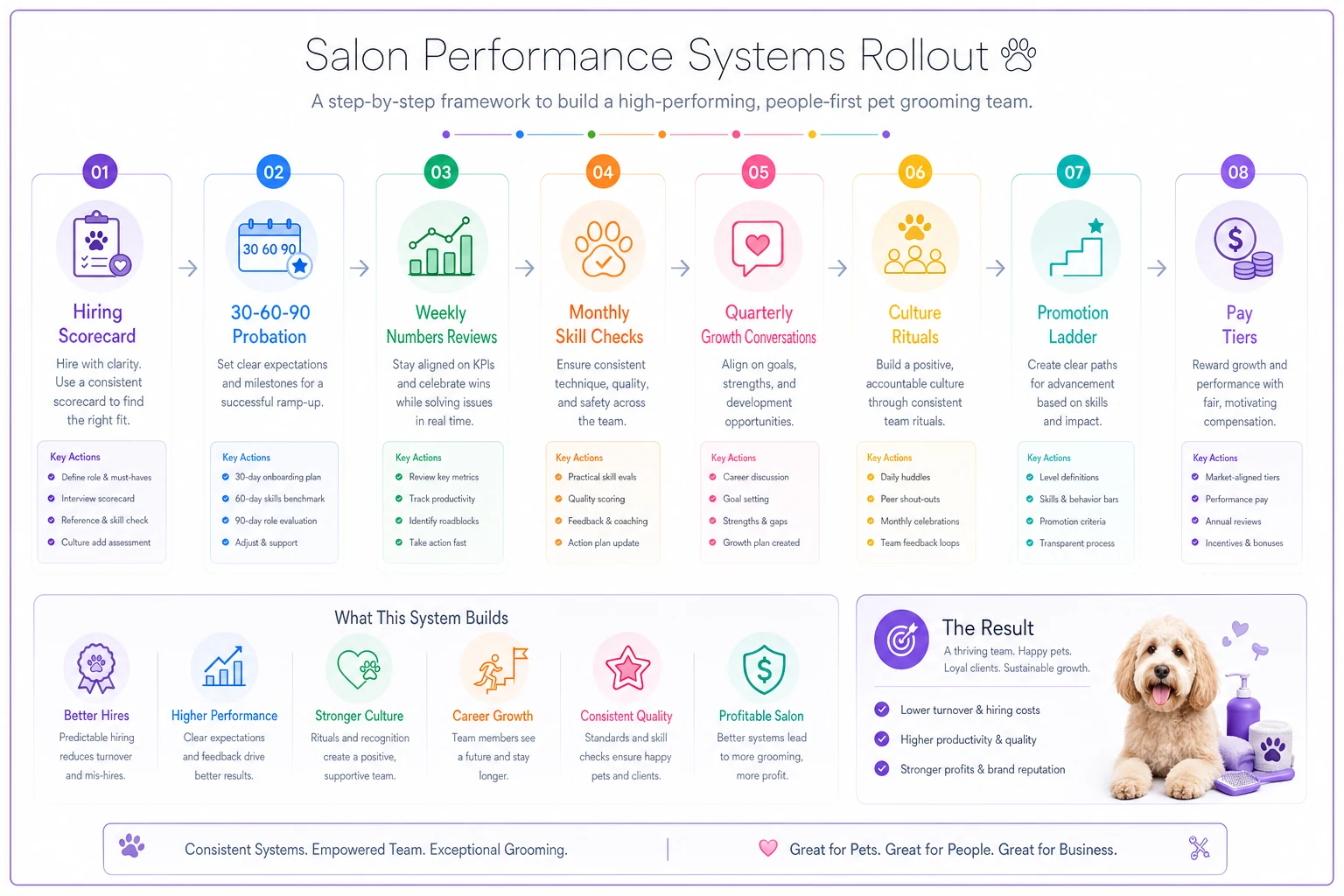
Start small. Don't try implementing everything at once — that's a recipe for rebellion and failure. Pick one element that addresses your biggest current pain point.
If turnover is killing you, start with the hiring scorecard and probation checkpoints. Get those working smoothly for a few new hires before adding anything else. If you have decent people but inconsistent performance, begin with weekly number reviews and monthly skill checks. Once those feel routine, layer in quarterly growth conversations.
-
Deploy the hiring scorecard on your next open position
-
Run the first 30-day probation checkpoint with any recent hires
-
Start weekly Friday numbers reviews with your current team
-
Add monthly skill checks once the weekly cadence feels normal
-
Roll out quarterly growth conversations after two months of consistent check-ins
-
Introduce culture rituals once performance rhythms are established
-
Formalize the full promotion ladder and pay tiers at your next team meeting
Each element should feel natural before you add the next. Your team should barely notice the transition from random management to systematic performance tracking. By the time you have the full system running, it feels like "how we've always done things" rather than some corporate imposition.
This is where AI-powered operational software genuinely helps. Instead of tracking everything across scattered spreadsheets and paper forms, you get all your performance data in one place. The software automatically calculates productivity metrics from your booking system, tracks review schedules so nothing slips through, and stores all documentation in searchable formats.
The AI components handle the tedious work — scheduling review reminders, flagging performance trends, generating review templates pre-filled with actual performance data. This frees you to focus on the human side: meaningful conversations, development plans, and building culture. When a groomer asks about their numbers or promotion timeline, everything's accessible instantly instead of buried in a filing cabinet.
More importantly, automation creates consistency. Every new hire gets the same onboarding checklist. Every review follows the same format. Every termination has proper documentation. That consistency is what turns random people management into an actual performance system — one that reduces turnover and drives productivity over time.
The operational impact compounds. Instead of spending 15 hours a week on recruitment because someone just quit, you're investing 2 hours weekly in performance management that prevents them from leaving in the first place. Instead of guessing why good groomers keep leaving after eight months, you have documented review conversations showing exactly when frustration built and what could have changed things.
The roles and capacity planning systems work together with performance management to create operations that actually feel predictable. When everyone knows their role, understands expectations, and sees a path forward, the daily chaos that exhausts salon owners starts to ease. You stop being the emergency resolver and start being an actual business owner.
Performance management isn't about controlling people or building bureaucracy. It's about giving your team the structure and clarity they actually want but rarely get in grooming salons. When they know where they stand, how to improve, and what comes next, they stop looking for those answers at other salons — and that's how you finally break the endless cycle of hiring, training, and watching good people walk out the door.
Ready to streamline your grooming business?
Join 500+ pet groomers using Furlyly to save time, reduce scheduling conflicts, and deliver exceptional client experiences.