

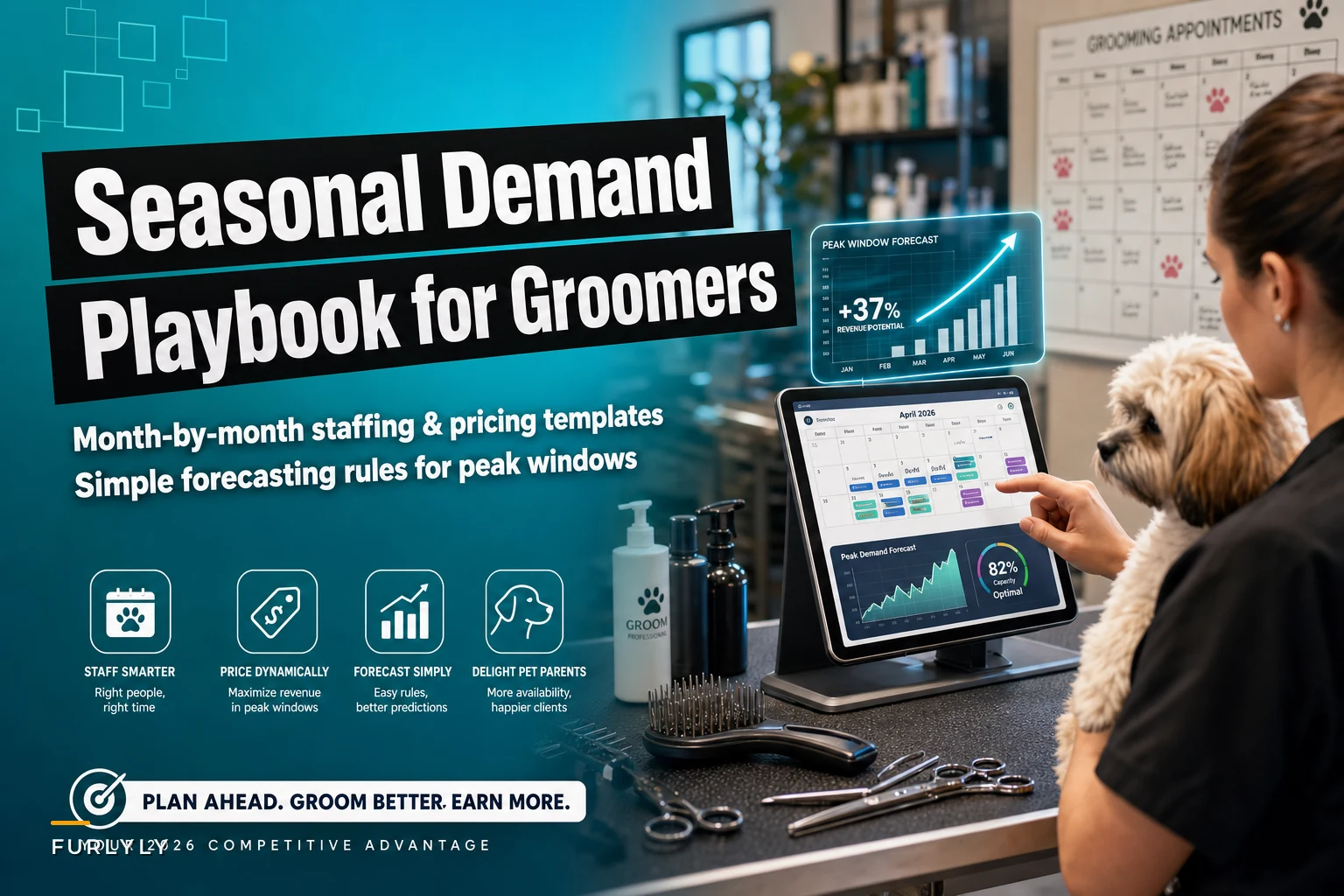

Last March, Sarah's Poodle Palace got absolutely crushed. She went from booking appointments two days out to having a three-week waitlist seemingly overnight. Regular clients couldn't get slots, walk-ins were turned away daily, and her two full-time groomers were pulling 12-hour days just to keep up. By the time she found temporary help, April was half over and the rush had mostly passed.
Sarah's story isn't unique. Almost every grooming salon faces the same seasonal chaos. December bookings that spike 70% above normal. Dead January weeks where you're paying rent on half-empty appointment books. September surges that catch everyone off guard.
The patterns are predictable—shedding seasons, holiday prep, back-to-school rushes. But most salons treat them like random weather events instead of business cycles they can prepare for.
Running a grooming salon means dealing with demand that swings 40-60% between peak and valley periods. Your standard staffing and pricing only works when business stays relatively stable. Once you hit those seasonal spikes, everything breaks down.
Why Your Current Capacity Planning Fails
Most grooming salons staff for their average week. Two groomers, maybe a bather, extra coverage on Saturdays. This works fine when you're seeing 30-35 appointments weekly.
But seasonal peaks don't add 10% more business—they can double your bookings within two weeks. Your capacity math completely falls apart.
Take a typical mid-sized salon running 120 appointments monthly. During shedding season, demand jumps to 180-200 appointments. You can't handle that by working longer hours or skipping lunch breaks.
The timing makes it worse. Peak periods compress demand into narrow windows. March isn't gradually busier—weeks 2-3 are absolutely slammed while week 1 stays normal. These micro-patterns create the real headaches.
Multiple demand drivers stack up during peaks. Spring brings shedding season plus travel prep plus tax refund spending plus warmer weather that means muddier dogs. Each factor might add 10-15% demand, but together they create those overwhelming rushes where nothing goes according to plan.
January Through June: The Real Demand Patterns
January starts brutally slow. Holiday spending hangover keeps people home, dogs groomed for Christmas still look decent, and cold weather reduces outdoor activity. Expect 20-25% below normal demand through mid-month.
Never miss a grooming appointment again.
Furlyly helps you book, confirm, and manage every pet grooming appointment effortlessly.
- Unified appointment scheduling
- Automated client reminders
- Staff availability & shift management
No credit card required
But there's a weird spike around January 20th—New Year's resolution people booking grooming as part of "getting organized." Demand jumps 15% above average that week before dropping again.
Run lean the first half of January. Your core team only, no extras. Use the downtime for equipment maintenance or deep cleaning. Consider 10% loyalty discounts for regulars who book during dead periods.
February depends heavily on location and weather. Warm climates see steady business with a Valentine's bump. Cold areas stay slow except for President's Day weekend—people use long weekends for pet appointments they've been putting off.
Don't get fooled by one busy Saturday. February's inconsistent, but the overall volume stays below average.
March changes everything. Second week of March typically sees 35-40% higher demand that continues through mid-April. Shedding season starts, spring break needs grooming, and tax refunds hit bank accounts.
Smart salons start hiring temporary help in February. By March 15th, it's too late—you're already drowning.
-
March week 1
Normal staff
-
March weeks 2-3
Add part-time temp (25 hours)
-
March week 4 through April week 2
Full temp coverage (35+ hours)
-
April weeks 3-4
Scale back temp to 20 hours
April maintains March's pace but with different challenges. Easter timing affects everything. Early Easter means travel cancellations. Late Easter means family gathering prep drives bookings.
The tell is your local school calendar. Spring break during Easter week usually means 20% fewer appointments. No spring break overlap means Easter hosting creates demand spikes.
May brings the most predictable surge: Mother's Day weekend. Thursday through Saturday before Mother's Day will hit 50-60% above normal. Everyone wants basic services—skip complex breed cuts and focus on bath-and-tidy volume.
Add a $15-20 express fee for appointments within four days of Mother's Day. Clients pay gladly for last-minute slots. After the holiday, demand drops immediately. Memorial Day weekend is actually slower than average.
June starts the summer pattern shift. Total appointments stay steady, but services change. Fewer full grooms, more summer cuts and basic maintenance. Flea treatments spike. Appointments get shorter but more frequent—your 90-minute doodle groom becomes 45-minute summer cuts every month instead of every two months.
July Through December: Navigating Holiday Chaos
July looks busy on your booking system but operationally it's a mess. Vacation cancellations and reschedules mean you might book 40 appointments but only complete 30. Build 25% overbooking into July or you'll have groomers with empty chairs.
Hidden pattern: back-to-school prep starts earlier every year. Last two weeks of July now see families preparing for August school starts, including pet grooming.
August varies wildly. College towns empty out mid-month. Family areas see steady business with small increases before school. Labor Day weekend is consistently dead—don't overstaff.
September has become a major grooming month, but it's back-loaded. After Labor Day, everyone realizes summer's over and dogs need serious attention. Weeks 2-4 rival December for booking pressure.
Add 20-25% capacity for late September or you'll lose revenue to wait times.
October brings strange patterns. Halloween week is surprisingly busy—costume parties and trick-or-treating mean groomed pets. The week after Halloween is one of the slowest of the year.
In snowbird markets, October starts 6 months of 20-30% increased demand. In northern areas, it's about pre-winter coat prep.
November revolves around Thanksgiving, but not how you'd expect. The surge happens two weeks before Thanksgiving, not during. Thanksgiving week itself drops 40% as everyone travels. Monday and Tuesday after Thanksgiving are absolutely slammed.
November staffing pattern:
-
Weeks 1-2
Add 20% capacity
-
Thanksgiving week
Skeleton crew (consider closing Thursday-Saturday)
-
Post-Thanksgiving
Full staff plus overtime availability
December is grooming's Super Bowl, but the timing is specific:
-
December 1-10
Steady but manageable
-
December 11-23
Complete chaos, 60-80% above normal
-
December 24-31
Dead zone
The December mistake: trying to handle rushes with overtime instead of temporary help. Your regular team burns out fast. Hire 2-3 temporary bathers December 10-23 to handle prep work while groomers focus on finishing.
Price dynamically. Early December gets normal rates. December 15-23 should carry 25-35% holiday surcharges. Emergency appointments December 24th or 31st should be double rate.
Building Your Actual Demand Forecast
Forget complex forecasting models. Start simple: Calculate your average weekly appointments from your slowest month (usually January). This becomes your 100% baseline.
Track relative demand monthly. After one year, you'll have your salon's specific demand curve.
-
3 weeks before expected surge
Start recruiting temps
-
2 weeks before
Train temporary staff
-
1 week before
Temps working partial shifts
For pricing, apply the 80% rule: When booked above 80% capacity more than two weeks out, increase prices 10-15%. Above 95% capacity, increase 20-25%.
Realistic forecasting template for a salon averaging 120 monthly appointments:
| Month | Expected Volume | Staffing Adjustment | Pricing Strategy |
|---|---|---|---|
| January | 95-100 | None | 10% loyalty discount |
| February | 100-110 | None | Standard |
| March | 140-160 | +1 PT temp | 10% increase weeks 2-4 |
| April | 135-150 | +1 PT temp | 10% increase |
| May | 125-130 | Overtime Mother's Day | 15% surge holiday week |
| June | 115-120 | None | Standard |
| July | 110-115 | None (plan for cancellations) | Standard |
| August | 100-105 | Reduced hours late month | Standard |
| September | 130-140 | +20 hours temp weeks 3-4 | 10% increase late month |
| October | 115-125 | None | Standard |
| November | 125-130 | +15 hours temp early month | 10% increase pre-Thanksgiving |
| December | 145-170 | +2 PT temps weeks 2-3 | 25% surge Dec 15-23 |
Here's a simple visual of the forecast-to-staff workflow.
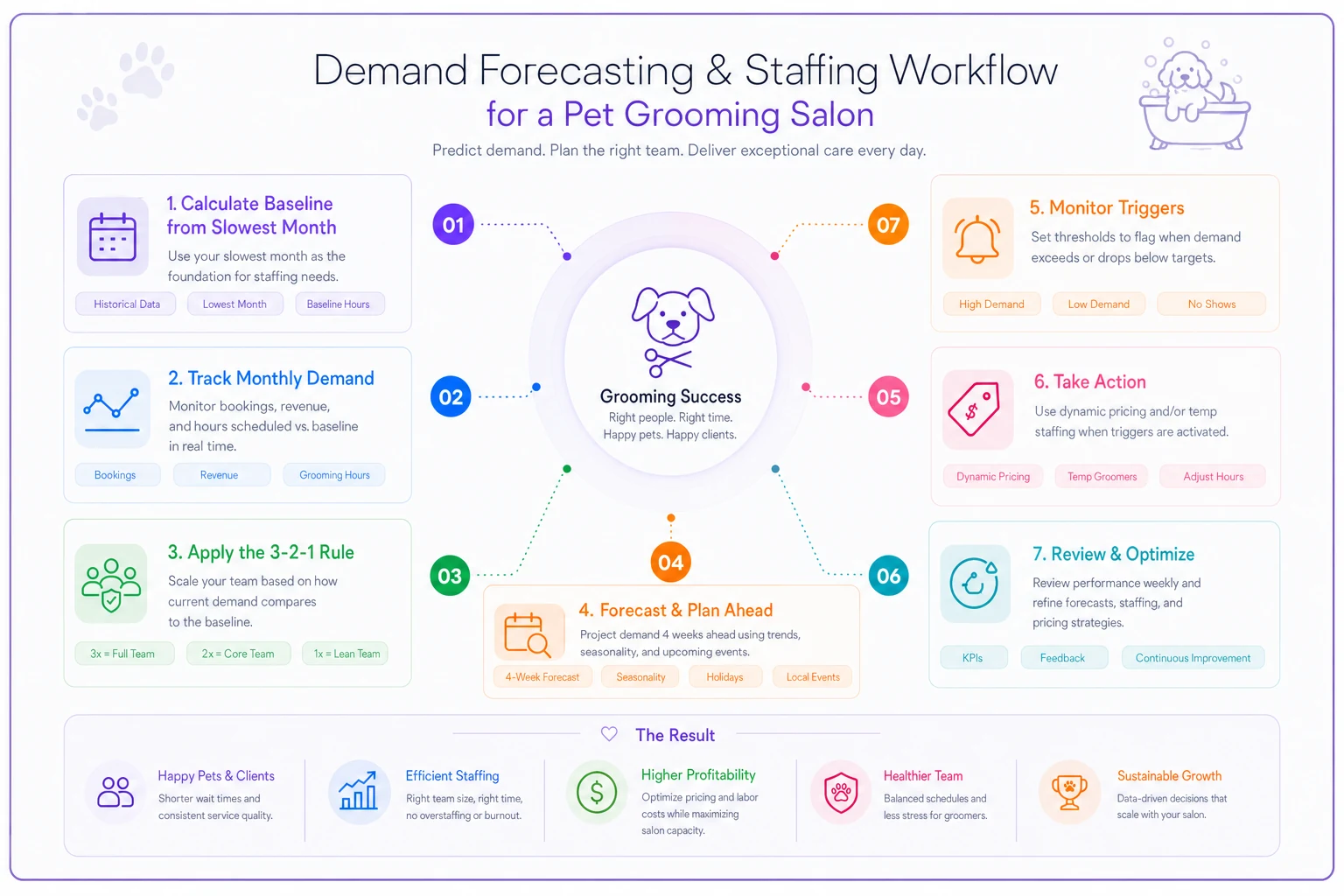
Use this workflow to connect booking pace to hiring and pricing decisions weeks in advance.
Finding Temporary Help That Actually Works
Most salons struggle with seasonal staffing because they look for fully qualified groomers. You don't need that during rushes—you need specific task support.
Positions that work for seasonal help:
-
Prep assistants (bathing, drying, nails)
Train in 2-3 days
-
Phone coordinators
Handle booking chaos
-
Kennel assistants
Manage dog flow
-
Bath-only providers
For simple summer cuts
Where to find them:
-
Vet tech students (their breaks align with your peaks)
-
Former groomers who left but miss dogs
-
Pet store employees wanting extra hours
-
Dog walkers with lighter holiday schedules
Pay structure: Base hourly plus $5-10 per appointment assisted. Keeps them motivated during rushes.
Create three video modules covering bathing process, safety, and dog handling so temps watch these before starting and are productive in 48 hours.
Quick onboarding: Create three video modules covering bathing process, safety, and dog handling. Temps watch these before starting, shadow for one day, then they're productive. 48 hours instead of two weeks training.
Dynamic Pricing Without Losing Clients
Most groomers avoid seasonal pricing because they think clients will revolt. But people expect dynamic pricing everywhere else—hotels, flights, ride shares. They'll accept it if you're transparent.
Post your "Seasonal Pricing Calendar" in January showing exactly when rates change. Clients can plan around it or pay premiums for convenience.
Base Season (30% of year): Standard pricing
Moderate Season (50% of year): Standard pricing
Peak Season (15% of year): 15-20% premium
Rush Periods (5% of year): 25-35% premium
Rush periods are specific weeks: pre-Thanksgiving, December 15-23, Mother's Day week. Be explicit about dates.
Protect regulars with "lock-in" pricing. Clients who pre-book six appointments get standard rates regardless of season. Fills your baseline while leaving premium slots for higher-paying occasional clients.
Express appointments during peak weeks command 50% premiums. You'll book 3-4 daily in December, adding $200-300 daily revenue with zero marketing.
Managing Valley Periods
Everyone focuses on peak seasons, but valleys kill profitability. A dead January at 60% capacity while paying full overhead hurts more than missing some December bookings.
Valley strategies that work:
-
Add service depth, not discounts. January is perfect for teeth cleaning, de-shedding treatments, skin conditioning—services you can't fit during busy periods. These add $20-30 per appointment without cheapening core services.
-
Create maintenance memberships starting during slow periods. $50 monthly for quarterly basic grooms locks in revenue and fills valley appointments. Limit membership sales to valley months so you're not obligated during peaks.
-
Handle problem clients during valleys—biters, matted disasters, chronic no-shows. Schedule time-intensive appointments when you have capacity to deal with them properly.
These strategies keep revenue stable and preserve your brand without training clients to expect discounts.
Software for Seasonal Operations
At Grooming Business in a Box, we help over 500 grooming salons manage seasonal complexity with AI-powered operational software. When demand swings 60% monthly, paper schedules and basic booking apps break down fast.
The challenge is that seasonal planning affects everything simultaneously—scheduling, staffing, inventory, marketing, pricing all need coordinated adjustments. When systems don't communicate, you're constantly reactive instead of strategic.
Modern grooming management platforms predict demand patterns from your historical data, automatically adjust pricing based on capacity, and suggest optimal temporary staffing levels. Instead of manually tracking when to hire or change prices, the system alerts you weeks ahead based on booking pace.
AI automation handles the communication chaos. During December rushes, automated appointment reminders, confirmations, and rescheduling requests save 2-3 hours daily of phone time. Your team focuses on actual grooming instead of administrative chaos.
Some platforms integrate temporary staff onboarding, scheduling them only for predicted peaks and calculating appointment-based bonuses automatically. This eliminates the administrative burden of seasonal staffing.
Building January Through March Revenue
Valley periods are strategic planning windows. January through February and late August are when you build systems to handle later chaos.
Document everything during slow periods: appointment types, timing patterns, common issues, inventory usage. This becomes next year's forecasting foundation. Most salons never do this because they're too busy surviving peaks to analyze them.
Train advancement during valleys. Your bather who handles basic clips could learn breed-specific cuts when you have time for proper training. By next peak season, they're contributing higher-value services.
Pre-sell peak season appointments at standard rates during valleys. In January, offer March shedding season appointments at January prices if booked and prepaid immediately. You lock revenue while smoothing demand.
December Survival Guide
December deserves its own playbook. Demand isn't just high—it's compressed into two weeks with zero flexibility. Nobody reschedules Christmas parties to January.
Start October preparation. Order supplies for double normal volume. December 20th is not when you discover you're out of basic shampoo. Pre-print forms, pre-charge regulars, pre-assign appointments to specific groomers.
December scheduling hack: Block book by service type. Mondays are small dogs. Tuesdays are doodles. Wednesdays are basic baths. This assembly-line approach increases throughput 30% compared to mixed scheduling.
Set communication boundaries after December 10th. Calls go to voicemail except emergencies. Clients text or email for non-urgent needs. This saves 2 hours daily of "any openings?" calls when you're booked solid.
Schedule recovery time. Close December 26-28 minimum. Your team needs recovery, and those days are dead anyway. January 2nd-3rd will be busy with post-holiday cleanup appointments, so ensure everyone's rested.
The reality is seasonal demand patterns repeat every year, in every market, with minor local variations. Salons struggling through December chaos or dead January weeks are reacting to cycles they could anticipate months earlier.
Proper seasonal planning typically increases annual revenue 15-25% while reducing burnout and customer complaints. You capture more peak demand with temporary help and dynamic pricing while maintaining profitability through valleys with strategic scheduling and expanded services.
Most groomers keep treating seasonal swings like unpredictable weather instead of manageable business cycles. The ones who plan ahead consistently outperform those who just react.
The reality is seasonal demand patterns repeat every year, in every market, with minor local variations. Salons struggling through December chaos or dead January weeks are reacting to cycles they could anticipate months earlier.
Proper seasonal planning typically increases annual revenue 15-25% while reducing burnout and customer complaints. You capture more peak demand with temporary help and dynamic pricing while maintaining profitability through valleys with strategic scheduling and expanded services.
Ready to streamline your grooming business?
Join 500+ pet groomers using Furlyly to save time, reduce scheduling conflicts, and deliver exceptional client experiences.